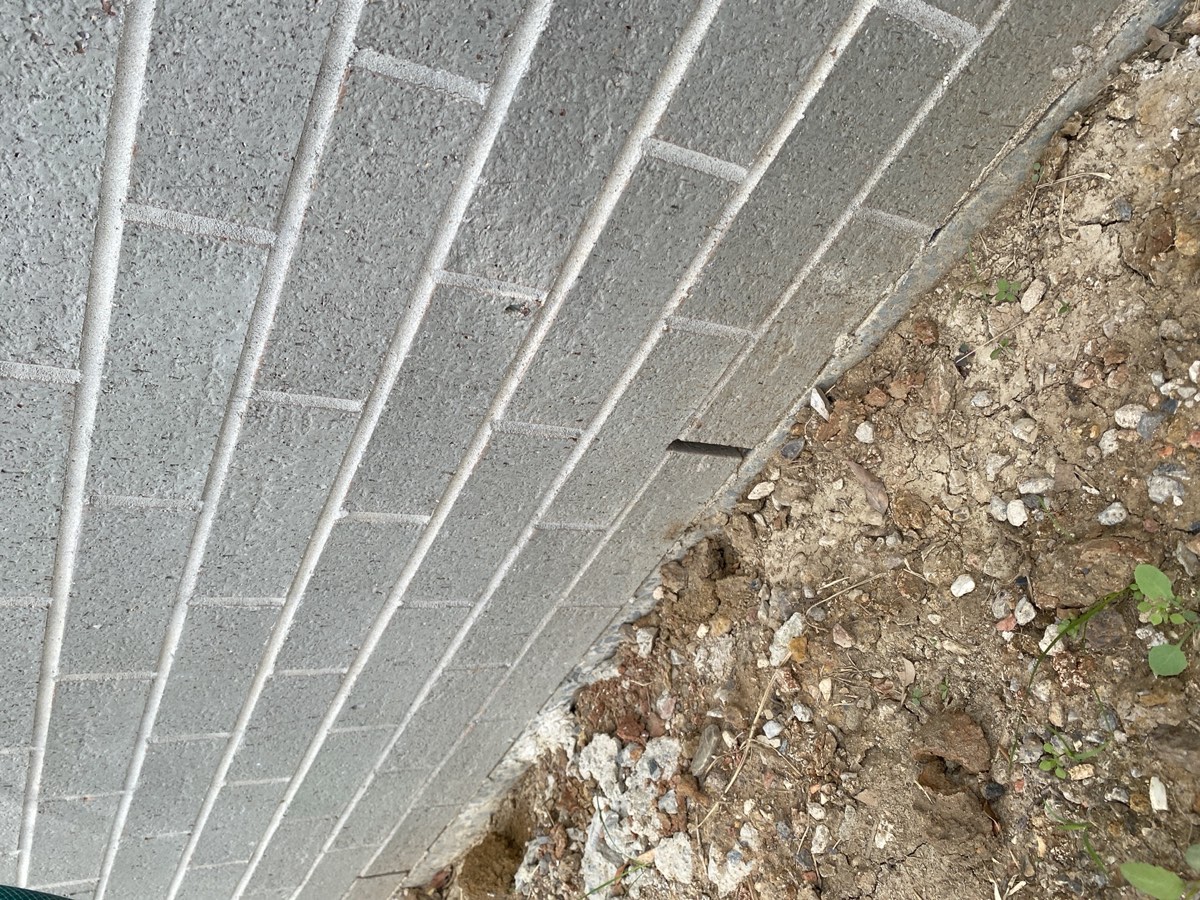
Three weep holes, three different failures
Missing, too high, and off the flashing.




In short: Every way a weep hole can fail, recorded on Riverstone homes at practical completion.
What a weep hole is for
It is the exit. Water that gets through the outer brick skin runs down the cavity, lands on a flashing and leaves the wall through the weep hole. Remove any part of that chain and the water has nowhere to go but into the structure.
Missing altogether
On one Riverstone home a run of brickwork simply had none. There is no argument to have about that one; the drainage path terminates in a wall.
Set too high
On another the weep holes existed but sat above the level they should. Water reaching the flashing runs past beneath them, so the holes are decorative.
Not sitting on the flashing
The third case is the subtlest. The weep hole is at roughly the right height but the flashing does not deliver water to it, which produces the same result as the second case for a different reason.
Why they reached handover
All three were recorded at practical completion, which means the brickwork was inspected, plastered around and finished with the fault in it. A lock-up inspection sees the same wall while a bricklayer can still fix it in an afternoon.
Written by the Owner Inspections team from inspections carried out in Riverstone. Licensed building practitioners, NSW Fair Trading licence 366177C.